
The Evolution and Impact of the Kinetic Bounce Exploit in SLAM TANK Competitive Play
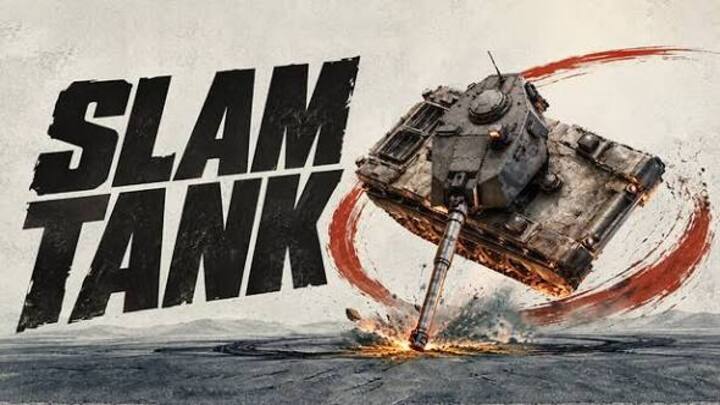
The competitive landscape of SLAM TANK has always been defined by its heavy physics mechanics and the brutal, metallic collisions that give the game its name. However, beneath the surface of casual vehicular combat lies a deep, intricate history of unintended mechanics that fundamentally altered how the game was played at the highest levels. This article delves deeply into the most controversial and transformative period in the game's history: the discovery, exploitation, and eventual patching of the Kinetic Bounce mechanic. By tracing this specific physics engine quirk chronologically, we can understand how a single line of collision code completely reshaped the competitive meta, forced the developers to rethink their design philosophy, and birthed a new era of high speed tactical gameplay that persists today.
The Initial Release and the Physics Engine Quirk
When SLAM TANK first launched into the competitive gaming sphere, the physics engine was praised for its weight and realism. The developers intended for momentum and mass to be the deciding factors in every engagement. Heavier tanks were supposed to dominate the center of the arena, while lighter chassis models were relegated to scouting and flanking roles. The core collision system calculated damage and knockback based on the relative velocity and mass of the two colliding vehicles.
However, the early collision detection algorithms contained a slight rounding error when calculating overlapping hitboxes at high speeds. When two tanks collided at specific angles, the physics engine would occasionally multiply the kinetic energy instead of dispersing it. This microscopic anomaly went largely unnoticed in the chaotic early days of casual matchmaking. Players who experienced it usually dismissed the sudden, violent repulsion of their tanks as a random glitch or a latency issue rather than a replicable mechanic.
The Core Collision Math The underlying math of the engine was designed to cap velocity upon impact. Yet, if a lighter tank initiated a pivot turn exactly three frames before contact, the hitbox overlap would register twice. The resulting calculation sent the lighter tank ricocheting away with preserved, or even increased, momentum. This specific interaction laid the groundwork for what would soon become the most dominant movement tech in the game.
Discovery of the Kinetic Bounce in Early Tournaments
The true potential of this physics quirk was unlocked during the regional qualifiers of the game's first competitive season. A relatively unknown player utilizing the lightweight Viper chassis accidentally executed the maneuver while trying to escape a heavy dreadnought class tank. Instead of being crushed, the Viper bounced off the heavier armor and soared across the map, landing directly on the objective point. This moment was broadcasted live, instantly catching the attention of the analytical minds within the professional community.
Within weeks, top tier players began taking the Viper and similar lightweight chassis into private training lobbies to dissect the interaction. They discovered that by intentionally clipping the corner of environmental obstacles or heavier teammates, they could trigger the velocity multiplier on demand. This technique was officially coined the Kinetic Bounce. The competitive scene quickly realized that mobility was far more valuable than raw armor if a player could master the precise timing required to execute the bounce consistently.
Early Frame Data Analysis To perform the Kinetic Bounce, players had to input a directional shift within a microscopic three frame window before collision. The margin for error was brutally small. Failing the input meant taking full collision damage and usually losing the round. However, the risk was entirely offset by the reward of traversing the entire map in a matter of seconds, completely bypassing standard choke points and defensive setups.
The Community Reaction and the Split in Playstyles
As the Kinetic Bounce proliferated through the highest ranks of the competitive ladder, a massive philosophical divide fractured the player base. Traditionalists, who preferred the slower, tactical positioning that the developers originally intended, despised the new mechanic. They argued that tanks flying across the arena broke the immersion and reduced the game to an erratic, unreadable mess of flying metal. Forums were flooded with demands for an immediate hotfix to restore the heavy armor meta.
Conversely, a new generation of mechanical purists embraced the exploit. They argued that the Kinetic Bounce elevated the game's skill ceiling, transforming SLAM TANK from a sluggish positioning game into a lightning fast, mechanics heavy esport. These players spent hundreds of hours in custom lobbies perfecting bounce angles, inventing new rollout strategies, and pushing the game's engine to its absolute limits.
The divide was not just ideological but also regional. The western competitive scene largely clung to traditional heavy compositions, hoping for a patch. Meanwhile, the eastern leagues adopted the Kinetic Bounce immediately, building entire team compositions around hyper mobile, bouncing scouts that could secure objectives before the enemy team could even leave their spawn zones.
Developer Silence and the Golden Age of Mobility
For almost eight months, the development team remained entirely silent on the issue of the Kinetic Bounce. This period, often referred to by the community as the Golden Age of Mobility, saw the meta evolve at a breakneck pace. Without developer intervention, players assumed the mechanic was here to stay and began treating it as a core feature rather than an exploit. The gameplay shifted drastically from slow, methodical pushes to explosive, high speed skirmishes.
During this time, the lightweight chassis class completely dominated the selection rates. Heavy tanks, once the kings of the arena, became obsolete liabilities. A heavy tank could not rotate fast enough to defend against a Viper that could bounce across the map in three seconds. Professional matches became breathtaking displays of mechanical skill, with players executing triple or even quadruple bounces off moving teammates to secure kills from impossible angles.
Advanced Rollout Strategies Teams began orchestrating incredibly complex rollout paths. A dedicated heavy tank would position itself immediately outside the spawn, acting entirely as a bounce pad for the three lighter tanks on the team. This allowed the entire offensive lineup to hit maximum velocity instantly, overwhelming the opposing team before they could set up defensive perimeters.
The First Patch Attempt and Unintended Consequences
The silence was finally broken when the developers announced Season Two, bringing with it a massive physics overhaul designed specifically to eliminate the Kinetic Bounce. The patch notes detailed a new cap on post collision velocity and a fix to the hitbox rounding errors. The traditionalists celebrated, believing the game would finally return to its roots. However, meddling with foundational physics code in a complex engine rarely goes exactly as planned.
Instead of removing the bounce, the patch inadvertently altered how vertical momentum was calculated. While horizontal bounces were significantly nerfed, players quickly discovered that clipping the bottom edges of ramps or stairs now sent their tanks launching straight up into the air. This new iteration, dubbed the Vertical Bounce, was arguably more game breaking than the original.
Tanks were now launching themselves into the skyboxes, raining artillery fire down on the map from areas that were never designed to be accessible. Matches devolved into bizarre anti air engagements. The developers realized they had only replaced a horizontal movement exploit with a vertical one, forcing them into a much more difficult position regarding how to handle the community's relentless innovation.
Rise of the Counter Meta and Heavy Armor Response
Realizing that a permanent fix to the physics engine would take time, the player base had to adapt to the Vertical Bounce meta on their own. This led to a surprising resurgence of heavy class tanks, but not for their intended purpose. Players began equipping the Goliath class chassis with heavy upward facing flak cannons and specialized gravity traps. If the lightweight tanks wanted to take to the skies, the heavy tanks would become the ultimate anti aircraft installations.
This created a fascinating, highly specialized counter meta. Teams would bait the enemy Vipers into executing vertical bounces, only to catch them mid air with concentrated heavy fire. Because tanks in the air had no way to alter their trajectory, they were highly vulnerable once their initial momentum slowed at the apex of their jump. The game became a deadly dance of baiting movement abilities and trapping airborne opponents.
The Anti Air Loadouts
- Proximity Detonation Shells
- Upward angled heavy plating
- Deployable gravitational tethers
- Mid air collision interceptors
The World Championship Controversy
The tension surrounding the physics engine reached its absolute peak during the Season Two World Championship. The grand finals featured a clash of the two dominant philosophies. The defending champions utilized a hyper aggressive lightweight composition, relying entirely on vertical and horizontal bounce mechanics to disorient their opponents. The challengers ran a disciplined, heavy anti air composition designed to completely shut down the airborne playstyle.
In the final round, a game deciding play occurred that remains the most controversial moment in SLAM TANK history. The defending champion's star player executed a flawless, frame perfect bounce that launched him over the entire enemy defense, but the physics engine slightly miscalculated his landing trajectory due to a damaged terrain voxel. His tank clipped through the objective point geometry, rendering him untargetable while he secured the win.
The arena erupted into chaos. The challengers demanded a rematch, citing map exploitation, while the defenders argued it was a legitimate calculation of the existing physics engine. The tournament officials eventually let the victory stand, but the public outcry was deafening. The event proved that the game's foundation was simply too unstable to support a long term competitive ecosystem without a fundamental rebuild.
The Engine Overhaul and the Death of the Exploit
Following the World Championship disaster, the development team made the difficult decision to take the competitive servers offline for a full month. During this unprecedented downtime, they completely rewrote the collision and momentum mechanics from the ground up. The legacy engine was replaced with a much stricter, deterministic physics calculation system. The era of the Kinetic Bounce was officially over.
When the servers returned, the game felt drastically different. Hitboxes were rigid, momentum capped strictly at intended top speeds, and exploiting geometry resulted in massive velocity penalties rather than boosts. The traditionalists finally had the game they had asked for since launch. Heavy tanks reclaimed the center of the arenas, and positioning once again triumphed over erratic mechanical exploits.
However, many professional players felt a profound sense of loss. The game was undoubtedly more stable and fair, but it had lost the wild, high flying magic that made the previous year so exciting to watch and play. Several prominent mechanical players retired from the professional scene, stating that the game had become too one dimensional and slow.
Legacy Mechanics and Bothing the Dash System
Recognizing the void left by the removal of the Kinetic Bounce, the developers sought a way to reintroduce high mobility without relying on broken physics calculations. In Season Three, they introduced a major mechanical overhaul that added standard, cooldown based Dash thrusters to all lightweight and medium tanks. This system was directly inspired by the movement patterns players had invented during the bounce era.
The Dash system provided short, controlled bursts of horizontal momentum. It allowed players to dodge incoming fire and reposition quickly, but because it was a coded ability rather than a physics glitch, it was entirely predictable and balanceable. The developers even included a specific piece of equipment called the Kinetic Deflector, which allowed players to push off walls for extra distance, serving as a sanctioned homage to the original exploit.
Sanctioned Mobility Options The introduction of directional thrusters meant that the skill expression shifted from exploiting engine flaws to managing cooldowns and stamina meters. The community slowly realized that while the wild unpredictability of the bounce was gone, the game now supported a healthy, intended version of the aggressive playstyle they had fallen in love with.
Modern Competitive Play in the Post Exploit Era
Today, the competitive landscape of SLAM TANK is widely considered to be in its healthiest state. The balance between heavy tactical positioning and lightweight aggressive mobility is carefully maintained through regular patches and predictable mechanics. The game has grown into a massive esports phenomenon, praised for its strategic depth and reliability.
Yet, the history of the Kinetic Bounce is deeply woven into the fabric of the community. Commentators still refer to optimal movement paths as bounce routes, and veteran players still occasionally try to execute frame perfect pivots out of pure muscle memory. The exploit may have been patched out of the code, but it irreversibly changed the DNA of the game.
The journey from a physics engine rounding error to an entirely new sanctioned mobility system highlights the unique relationship between developers and competitive players. The Kinetic Bounce proved that sometimes the most defining feature of a game is not what the creators intend, but what the community discovers in the pursuit of victory. SLAM TANK would never have reached its current heights without the chaotic, broken brilliance of its early physics engine.